Fixing concrete cancer in Brisbane: what to do first
By Artigellence ·
Fixing concrete cancer begins with getting the damage assessed early, because water keeps reaching the steel and the rust keeps pushing the concrete apart. Before any work starts, check what approvals your job needs. Brisbane City Council's 2026-27 fee schedule lists $184.00 for each application in Zone C, which it describes as other areas of Brisbane.
Call (07) 3523 1792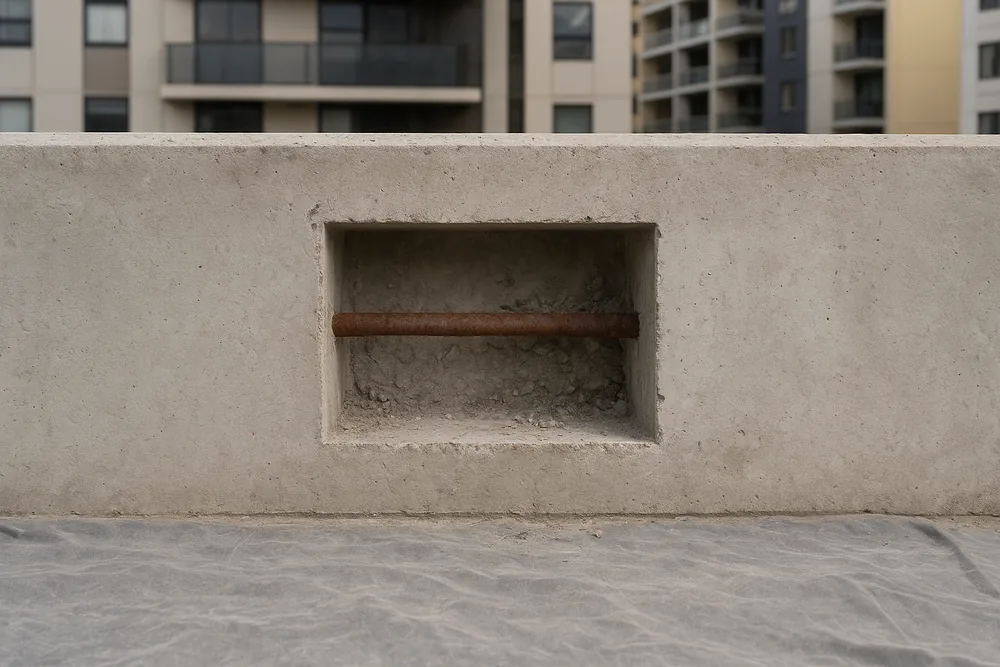
What is going wrong inside the concrete
Concrete cancer is a rusting problem, not a problem with the concrete mix itself. UNSW's School of Materials Science and Engineering explains that when there are cracks or pores in the concrete, water can seep in and react with the steel reinforcing to form rust.
The trouble is what the rust does next. The same UNSW page points out that the rust takes up more room than the steel it formed from, so it shoves against the concrete around it.
There is a second, quieter issue. UNSW notes that the steel is the part of the material providing the strength, and that is the part being eaten away. A patch that looks like a cosmetic flake can therefore mean the structure is losing capacity underneath.
Why leaving it makes the repair bigger
Concrete cancer feeds itself. According to UNSW, corrosion that produces rust forces open bigger cracks, and those wider cracks let progressively more water in. Every wet season gives the process another push, so a small spot of damage tends to grow rather than sit still.
UNSW also describes the problem as still a major concern in older buildings. In Brisbane that includes the older apartment blocks and character buildings across the inner suburbs. Council's heritage register, for example, describes the reinforced concrete balconies at Baysmere on Bowen Terrace, a reminder that concrete balconies and structural elements have been part of the city's buildings for a long time.
For a householder or an owners corporation, the practical point is simple. An inspection tells you how far the rust has travelled before you commit to a scope of work.
Approvals and site rules to sort out before work
Concrete repair is not always treated the same way as a renovation, so ask before assuming. Brisbane City Council says you will need building approval before starting work on extensions, raising and renovations, and it suggests contacting a licensed building certifier for advice. Council also explains that a private certifier is the assessment manager for building work applications, with council acting as a referral agency that provides advice. If your repair is more than a surface patch, a certifier is the right person to confirm what applies.
Site logistics can need a permit too. Council's page says you may need a footpath permit if building works involve storing equipment on a footpath or placing a skip bin on a footpath. Concrete removal makes a lot of rubble, so a skip is common on these jobs.
Noise matters as well. Council's out-of-hours construction page states that concrete and asphalt cutting activities must be done during the day, so plan around normal working hours rather than expecting early or late cutting.
If the building is a local heritage place, extra care applies. Council describes a local heritage place as a private or public property protected under Brisbane City Plan 2014 for its contribution to Brisbane's past, so check the overlay before you plan changes.
Council fees and zones in Brisbane
Council sorts some of its fees by zone. Its footpath works and permits page defines Zone C as other areas of Brisbane, and it separates that from the city centre zone. The 2026-27 schedule of fees and charges lists $184.00 for each application in Zone C. By comparison, the same schedule lists $369.00 for each application in Zone A, the principal centre (city centre) zone, which does not include the Queen Street Mall or the Valley Malls.
Those figures are council charges, not the cost of repairing the concrete, and they will only apply if your job needs that kind of application. If you are not sure where to start, an inspection is the cheapest way to find out how much of the structure is affected.
Artigellence is the marketing business that operates this site and writes its articles. It does not carry out the work described.
Thanks — we have your enquiry. Someone will be in touch shortly. Prefer to talk now? Call (07) 3523 1792.
Last reviewed · Updated · First published